OUTDOOR LIVING / THE BLACKLINE JOURNAL
A terrace that gives the home a graceful connection to the garden
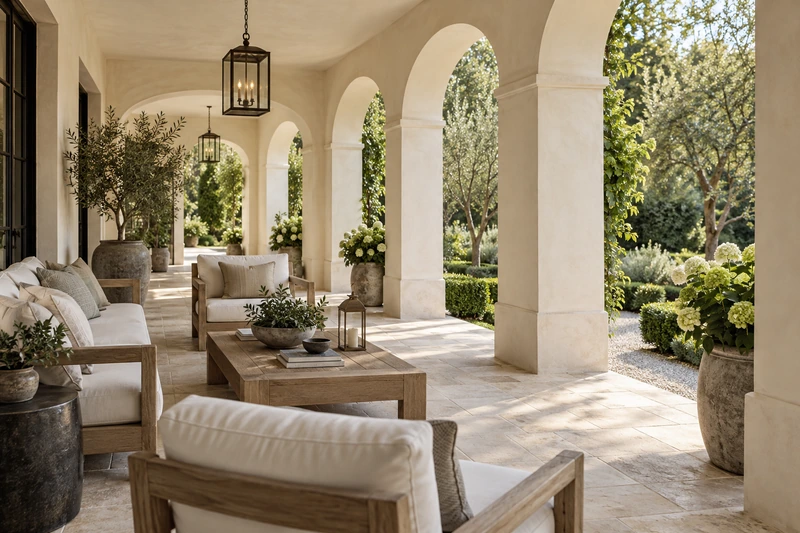
The space just beyond the door can become a generous transition: part everyday room, part invitation to spend more time outside.
Treat the terrace as a transition
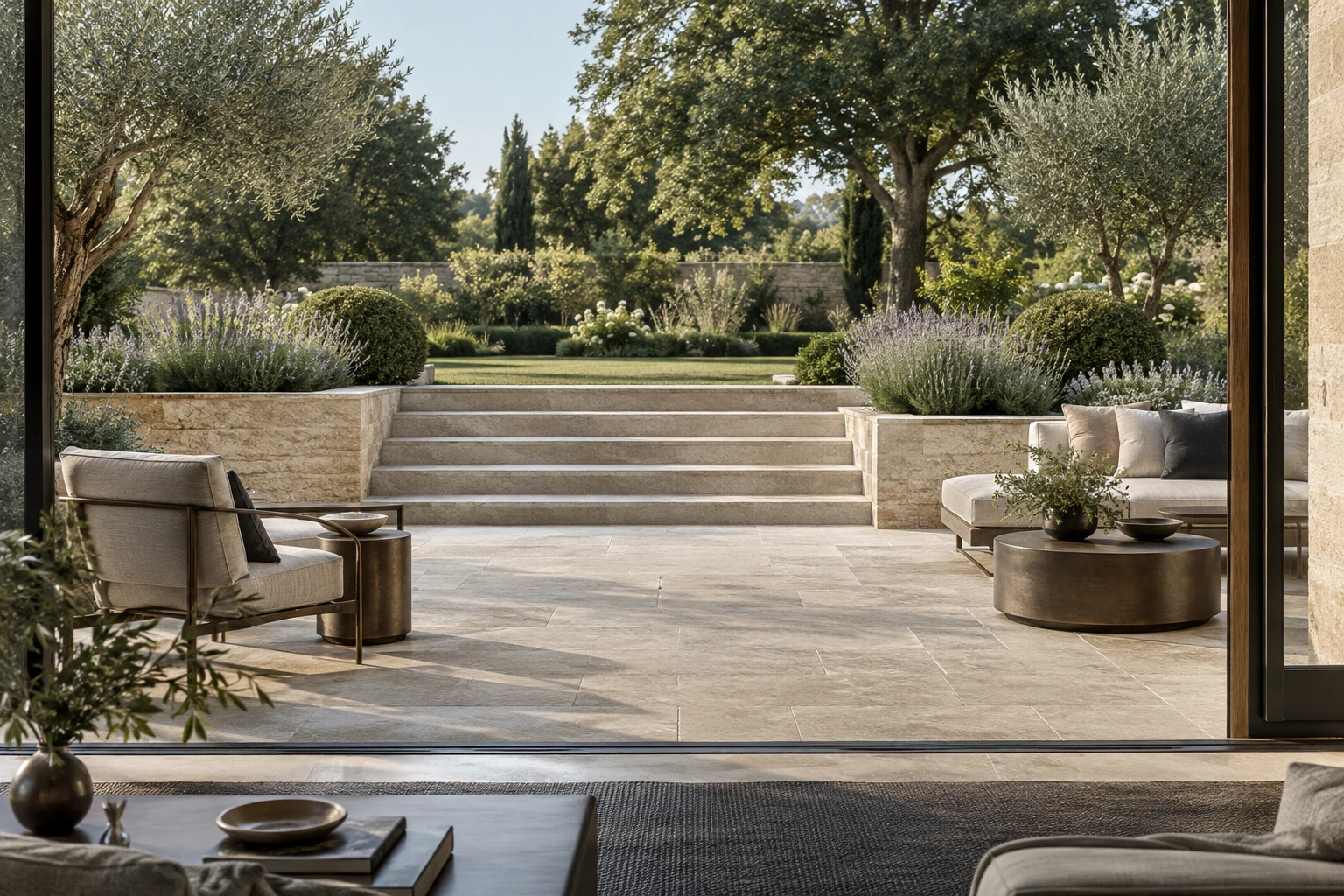
A terrace sits between two different experiences of home. On one side are the rooms and routines inside; on the other are planting, sky and a changing landscape. Its character comes from how it connects those worlds rather than from the paving surface alone.
Look at the terrace from inside before deciding what belongs on it. Consider what you want to see through the doors when the space is empty and when it is occupied. A thoughtful arrangement can provide an inviting foreground to the garden while still feeling useful as a place to spend time.
Give furniture an early role
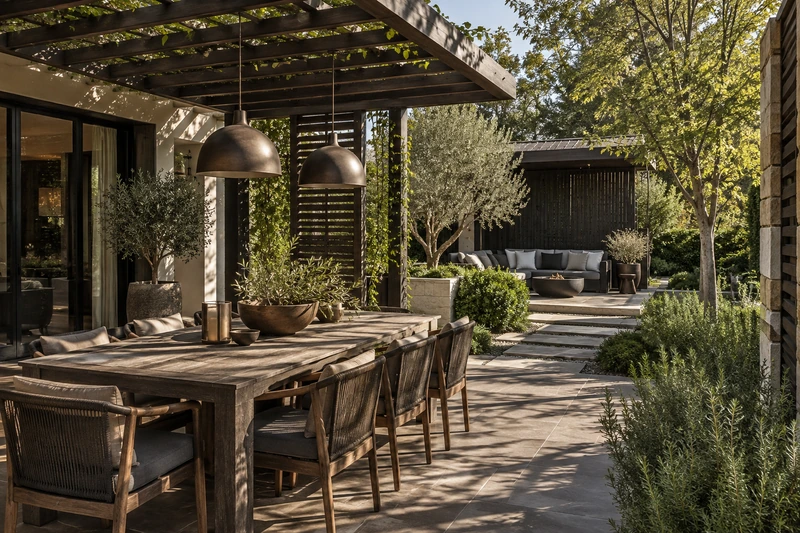
The intended furniture helps explain the terrace’s purpose. A dining arrangement creates one kind of experience, while a low group of chairs creates another. Bring examples of the pieces you already own or hope to use, including items that matter for their history rather than their appearance.
Consider how people will move around those pieces and where they will look while seated. An appealing shape on a plan should also make sense with a table in use. Discuss these relationships early so the terrace is shaped around living, rather than furnished after its main decisions have already been made.
Choose a surface in context
A material sample tells only part of the story. The surrounding house, nearby planting and furniture all influence how a terrace surface will feel. Gather those references together when discussing colors and textures, and consider whether the terrace should read as a quiet background or a defining visual element.
Ask the project team to explain the options appropriate for the setting and the care each may involve. Personal taste matters, but so does your willingness to look after a particular finish. A choice feels more considered when the desired appearance and everyday expectations are part of the same conversation.
Leave a reason to explore beyond it
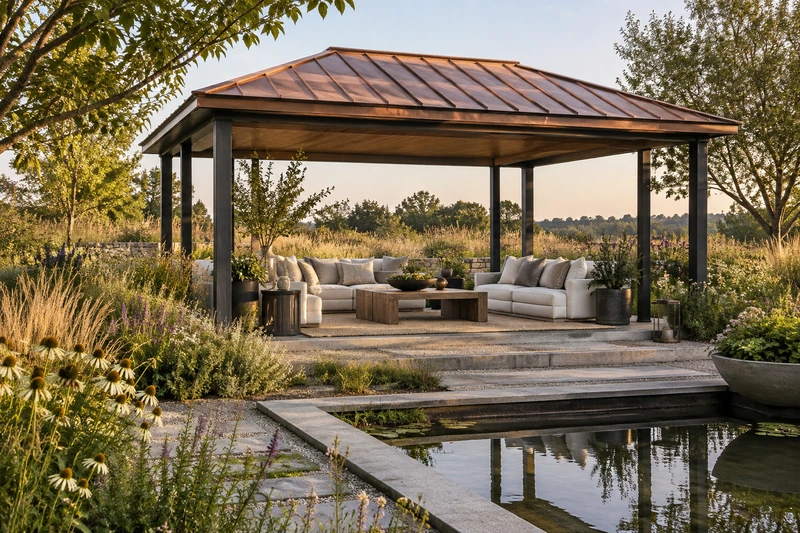
A terrace can be a destination and a starting point. Think about where the eye travels after reaching its edge, and whether the garden offers another place to pause. A view, a path or a planting composition can suggest a connection without making every outdoor area equally prominent.
Bring the larger property into the discussion, even when the proposed work is focused near the house. Understanding the garden’s present character and your longer-term wishes helps the terrace feel part of a connected landscape. The result should reflect the way you want to move between home, gathering and a little quiet outdoors.
FOR YOUR OWN PROJECT
Make the idea your own.
- Study the terrace from the rooms inside.
- Bring furniture references to the planning conversation.
- Review surface choices with the wider palette.
- Identify the garden view beyond the terrace.