OUTDOOR LIVING / THE BLACKLINE JOURNAL
A pavilion that gives the garden a place to gather
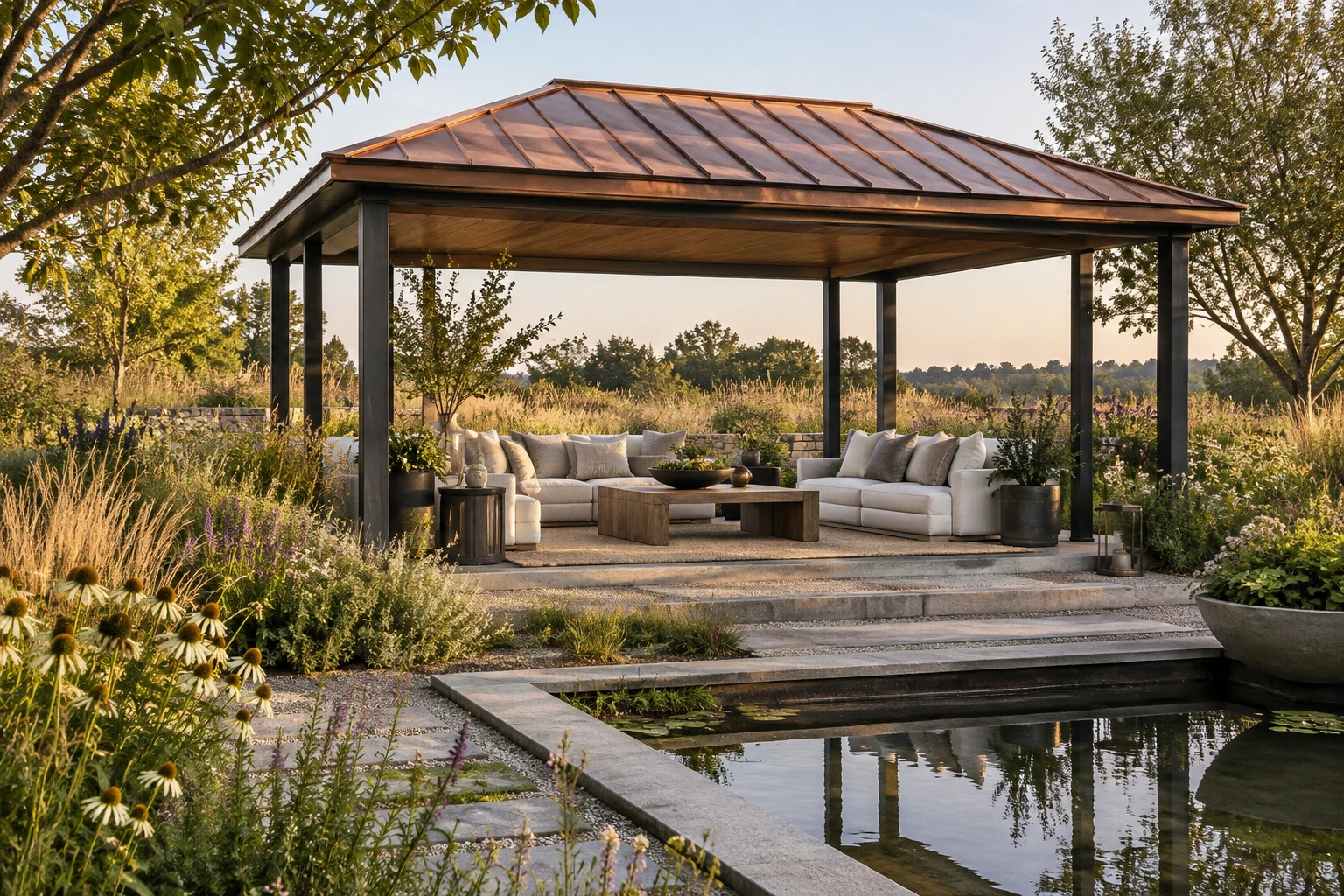
A garden pavilion can create a destination beyond the house, with its own sense of arrival, outlook and occasion.
Decide why you want to go there
A pavilion is most compelling when it offers a reason to leave the house. Perhaps it is a gathering place with a different view, a setting for relaxed meals or a quieter corner for conversation. Define that purpose before collecting ideas for the structure itself.
Consider how the experience should differ from a porch or terrace close to the home. If the pavilion simply duplicates an existing space, it may be less meaningful than expected. A clear brief explains what the new destination adds to the property and how it fits the way you enjoy being outdoors.
Think about the approach
The journey to the pavilion helps establish its character. A direct connection may suit frequent meals, while a more gradual approach can make the space feel like a retreat. Describe how you imagine arriving and what you would want to see along the way.
Look back toward the house as well as forward toward the garden. The pavilion will become part of several views, including some seen from rooms inside. Discuss its position as part of the whole landscape so the destination feels connected without competing with every other feature on the property.
Give the structure a quiet relationship to the house
A pavilion does not need to reproduce the house in miniature. It can share a material, a color or a simple architectural gesture while having an identity suited to the garden. The relationship should feel intentional when the two are seen together.
Collect a small number of references that explain what appeals to you, such as an open feeling, a restrained palette or the warmth of a particular finish. Label the qualities you like rather than asking for an entire image to be recreated. This leaves room for an original design response to your property.
Bring everyday use into the conversation
Think about the items you would carry to the pavilion and the route they would take. Meals, books and gatherings bring different practical needs. Consider where furniture and outdoor accessories will live between uses, and how much preparation you want an ordinary visit to require.
Discuss any proposed features as part of the overall scope rather than treating them as automatic additions. Each should support the main purpose you identified at the start. A pavilion with a clear idea can feel more inviting than one filled with features that leave little room for the experience of the garden itself.
FOR YOUR OWN PROJECT
Make the idea your own.
- Name the experience the pavilion should offer.
- Imagine the approach from the house.
- Identify a visual connection to the existing home.
- Discuss everyday use before adding features.