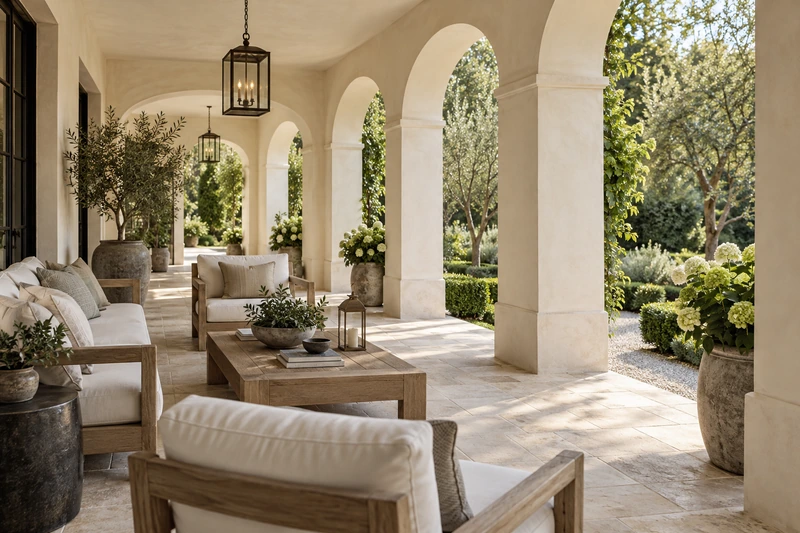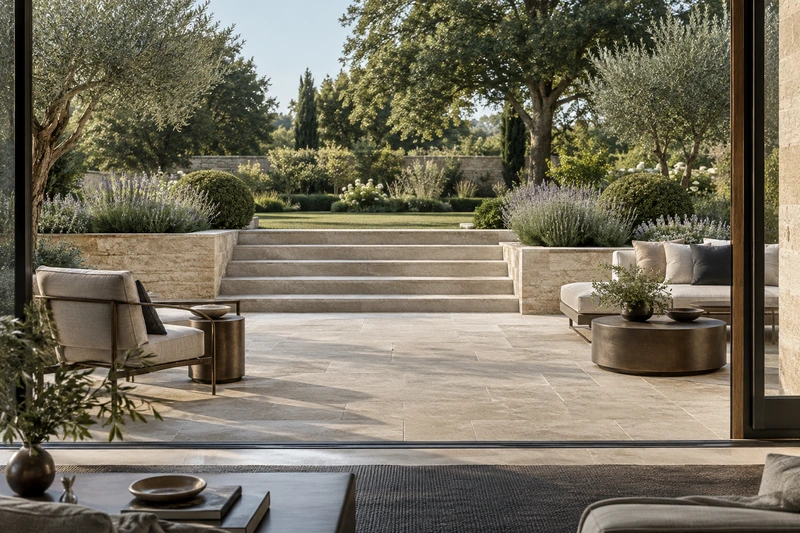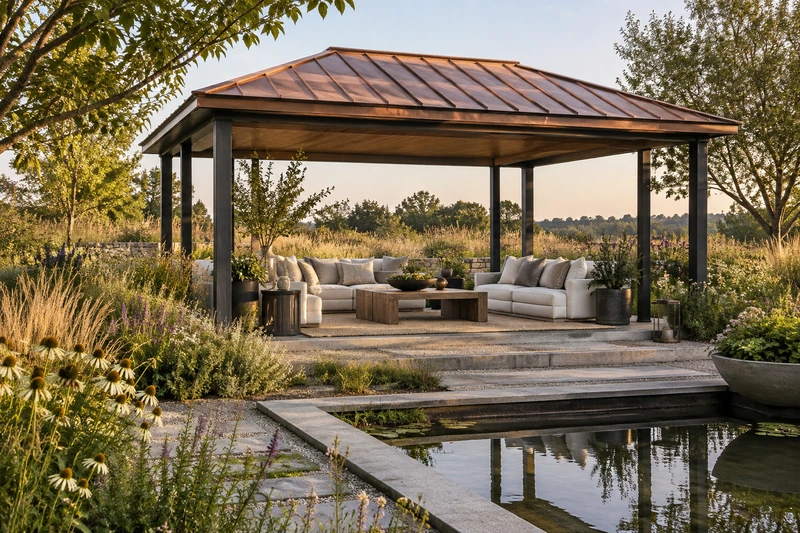
OUTDOOR LIVING / THE BLACKLINE JOURNAL
Outdoor rooms that move naturally from one moment to the next
Dining, gathering and quiet time can share the same landscape when each space has a purpose and the connections feel effortless.
Let activities define the spaces
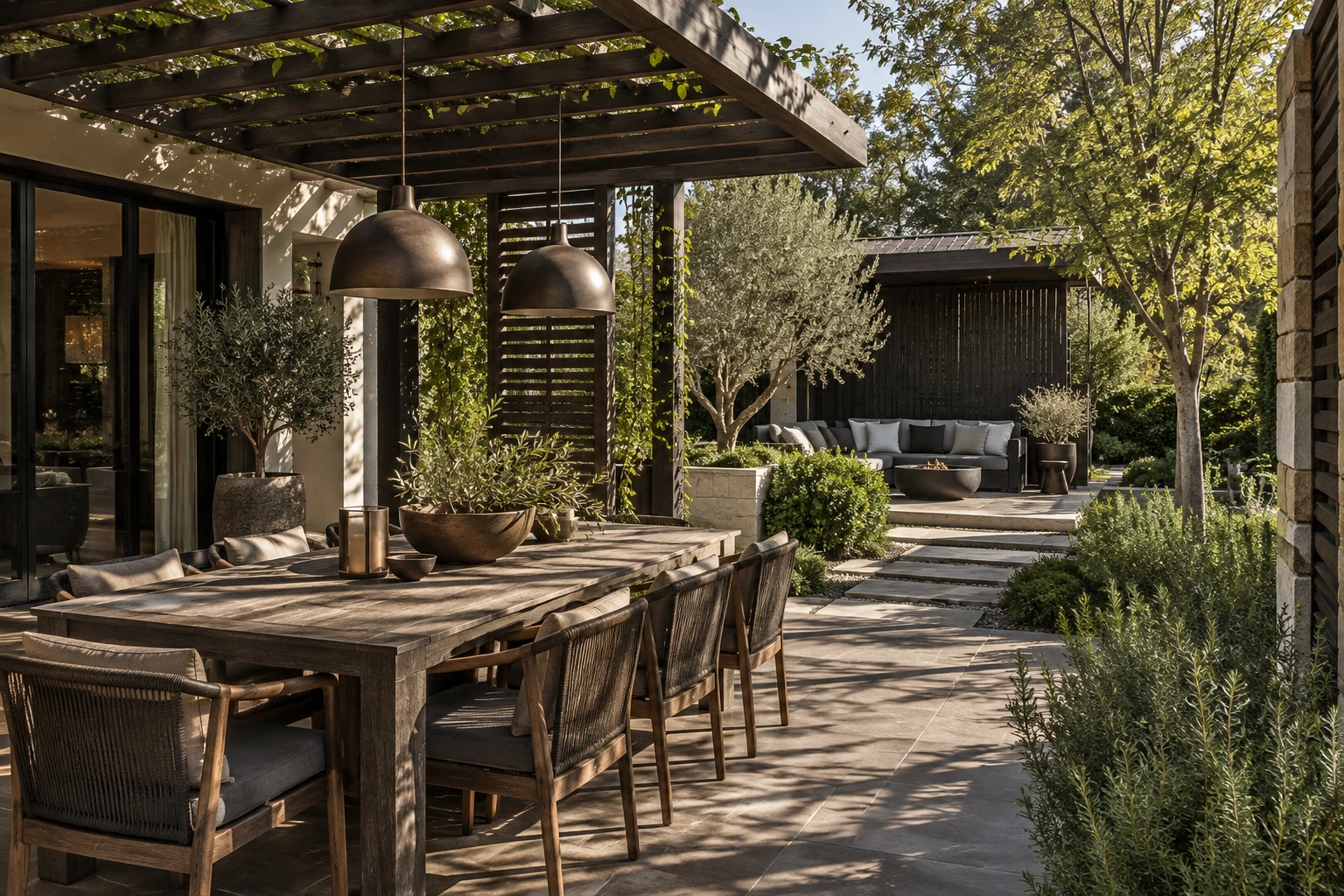
An outdoor room does not need walls to have a clear purpose. A dining table, a group of chairs or a quiet bench can establish a place for a particular activity. Begin by naming the moments you want your outdoor space to accommodate, then consider which belong together.
A lively gathering area may feel connected to dining, while a reading spot may benefit from a little distance. This is a question of atmosphere as much as arrangement. Describe the experience you want in each area before concentrating on shapes, paving patterns or a collection of individual features.
Make movement part of the design
Think about the routes people will take between the house, table, garden and seating. Imagine those spaces occupied, with chairs pulled out and a conversation underway. The path that looks clear in an empty photograph may feel very different during an ordinary family meal.
Discuss the connections as part of the main plan, rather than as strips of leftover space. A change of direction can reveal a new view, while a direct route can make a frequently used area feel welcoming. The aim is a readable arrangement that supports how people naturally move and gather.
Keep the material story connected
Outdoor areas can have different identities without feeling like separate projects. A repeated color, related surface texture or consistent furniture tone can create a quiet connection. Consider how the materials relate to the exterior of the house as well as to one another.
Limit the number of competing ideas before adding decorative accents. A varied garden often supplies plenty of interest on its own. Review samples and images as a group, then ask which choices reinforce the overall atmosphere. The intention is a landscape with enough continuity to feel composed and enough variation to remain inviting.
Plan for the ordinary day
Entertaining photographs can make every outdoor space seem designed for a celebration. Your own brief should also describe a weekday breakfast, a short conversation or an hour spent alone. A useful arrangement welcomes those smaller moments without requiring the whole garden to be in use.
Consider where furniture, cushions and serving items will go when they are not needed, and discuss the care associated with proposed materials. These practical questions belong beside the visual ones. An outdoor setting feels more complete when its everyday routines have received the same attention as its first impression.
FOR YOUR OWN PROJECT
Make the idea your own.
- List outdoor activities before selecting features.
- Trace routes with furniture imagined in use.
- Choose a connected palette of materials.
- Describe a typical quiet day outside.