
Service area · Arlington County and Alexandria
Home renovations and additions in Alexandria, Virginia
Alexandria is an independent city, so its own offices and boards issue permits, review historic work and protect stream buffers. A home renovation contractor in Alexandria, VA plans around all three, from the row houses of Parker-Gray to Rosemont and Del Ray, both laid out around the turn of the twentieth century.
Blackline Builders is based in Manassas and maps those reviews for each project here before a plan is drawn.
Building in Alexandria
City permits and city zoning. The Department of Code Administration issues building permits and inspects work under the Virginia Uniform Statewide Building Code. For an addition, Planning and Zoning also needs a Floor Area and Open Space Computations Form and a plat with the application, since floor area and open space limit how far a house can grow. The city's permit list includes decks, porches and stoops, retaining walls holding two feet of soil or more, and fences over six feet.
Two historic districts, one board. The Board of Architectural Review regulates the Old and Historic Alexandria District, established in 1946 as the third oldest historic district in the country, and the Parker-Gray District, a 40-block area named for the Parker Gray School. A single board has overseen both since 2019. It approves a Certificate of Appropriateness for new construction and for exterior alterations to structures visible from a public way. It also regulates buildings outside the districts that City Council has designated as One Hundred Year Old Buildings.
Demolition is reviewed even out of sight. For a building under the board, removing more than 25 square feet of material from a structure needs a Permit to Demolish, whether or not the work can be seen from a public way. Opening a rear wall for an addition can involve that much material, so the permit belongs in the plan from the first drawing.
Archaeology under the footings. Alexandria's Archaeological Protection Code dates to 1989. City archaeologists review building permits that involve ground disturbance, and the city notes that archaeology happens across Alexandria, not only in the historic districts. On a smaller project, such as a residential addition, they may ask to excavate before construction, monitor the work, or be told of any finds.
Stream buffers and floodplains. Alexandria is a Chesapeake Bay Act locality. Perennial streams carry a 100-foot Resource Protection Area buffer, and the rest of the city is a Resource Management Area. The city's RPA map is a guide; a site assessment confirms whether a perennial stream is present. Certain projects within or near an RPA need a Water Quality Impact Assessment. On RPA lots that existed before March 2002, a minor addition may be possible if the house stays intact and the addition fits the neighborhood in bulk and scale; larger projects need an exception. Floodplains follow streams such as Four Mile Run, Holmes Run, Cameron Run and Strawberry Run, and low ground near the Potomac. Any development there, even bringing in fill, needs a permit. When improvements to a building there cost half its market value or more, it must meet the same construction requirements as a new building.
Curb cuts. The city maintains its own streets. A new or widened curb cut is an application to Transportation and Environmental Services.
Neighborhoods and what applies
Old Town. The Old and Historic Alexandria District runs generally from Hunting Creek north to Bashford Lane, and from the Potomac west to near the King Street Metro.
Parker-Gray. The neighborhood sits in the northwest of the Old Town grid, and small row houses and town houses make up most of its buildings.
Rosemont and Del Ray. Rosemont, in northwest Alexandria, was developed near the trolley line between 1908 and 1914. Much of Del Ray was once the separate Town of Potomac, whose first subdivisions were platted in 1894; the city annexed the town in 1930. Both hold National Register historic districts; whether a house also falls under the board depends on the local district maps and any 100-year-old building designation.
What we build in Alexandria
- Estate and historic home renovations in Old Town and Parker-Gray, planned for the Certificate of Appropriateness and, where material comes off, the Permit to Demolish.
- Whole-house renovations for older houses whose structure, systems and layout need attention together.
- Room and second-story additions, with floor area and open space measured before design and footings planned with archaeology review in mind.
- Kitchen renovations, with board review in a local district when a window or wall seen from a public way changes.
- Tear-down and rebuild outside the historic districts, where zoning limits on floor area and open space shape the new house.
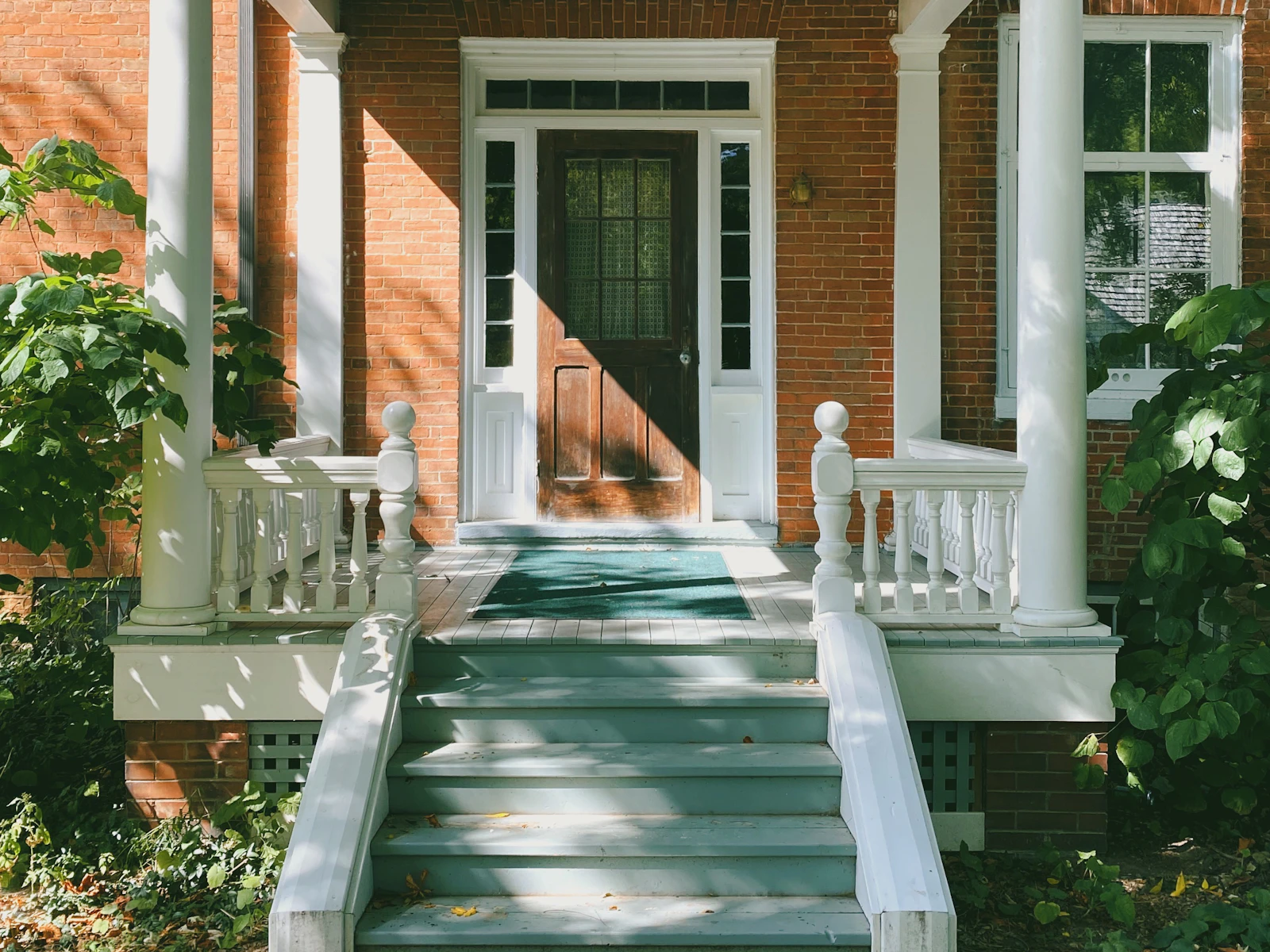
- Patios, walkways and steps, including front stoops, which need a building permit in the city.
How an Alexandria project comes together
Before design, we confirm district status and any designation, RPA and floodplain mapping, and how much floor area remains. In a district, the exterior is drawn with the Certificate of Appropriateness in mind from the start. The price comes after the visit, once the district, the buffer and the floor area left to use are known.
Nearby areas
Arlington County, next door, runs its own permits and historic review. Compare the two jurisdictions side by side, or read about rebuilds and additions in Arlington.
Questions about building in Alexandria
A Certificate of Appropriateness covers new construction and exterior alterations to structures visible from a public way. A Permit to Demolish covers removing more than 25 square feet of material from a structure, visible or not. One board has handled both districts since 2019.
It applies to historic buildings outside the two local districts that City Council has designated by ordinance, under Article 10-300 of the Zoning Ordinance. A designated building falls under the Board of Architectural Review. Age alone does not bring a house under the board; designation does, so confirm it with the city.
Not because of their National Register listings. A federal listing does not, on its own, limit what a private owner does, unless the project involves federal funding or permits. Board review applies in the two local districts and to designated 100-year-old buildings. Local and National Register boundaries differ, so check the parcel.
To plan a renovation or addition in Alexandria, book a free on-site estimate or call 571-200-3100.
Start a project
Bring us the lot—or the home you want to transform.
We'll meet you on site, walk the property with you and talk through what the work will take.