CUSTOM HOMES / THE BLACKLINE JOURNAL
A modern farmhouse with character beyond the familiar look
Begin with proportion, material and a relationship to the land. Let the style emerge from those decisions rather than a collection of recognizable details.
Start with the whole silhouette
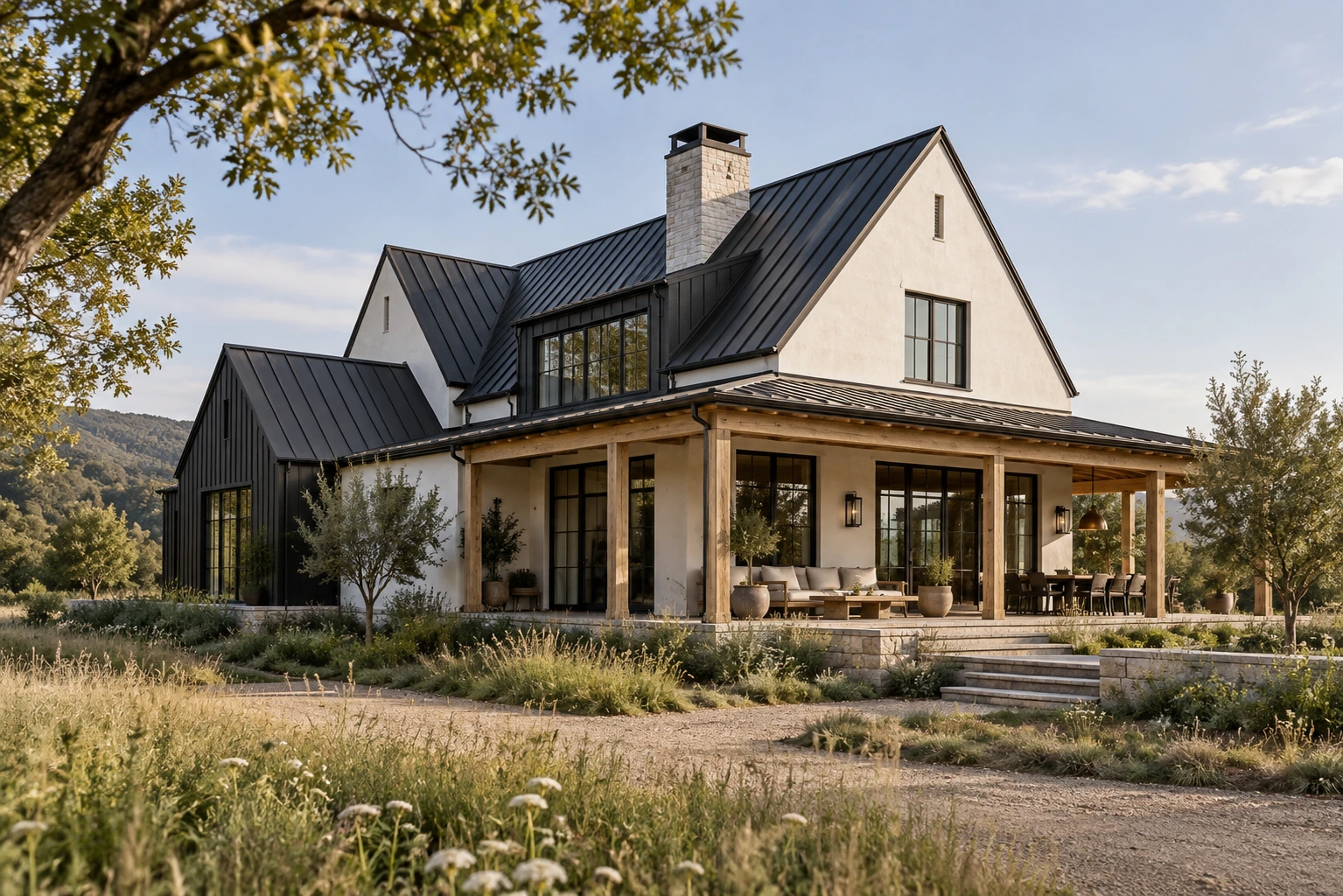
A house is read as a whole before its smaller details are noticed. Look at the balance of its main forms, the position of the entrance and the way it meets the ground. These relationships establish a sense of character that a collection of decorative accents cannot create on its own.
When reviewing references, look beyond the familiar color combinations. Notice which houses feel calm, which feel lively and which seem connected to their setting. Describe those qualities to your design team so the conversation begins with composition rather than imitation.
Choose materials with distinct roles
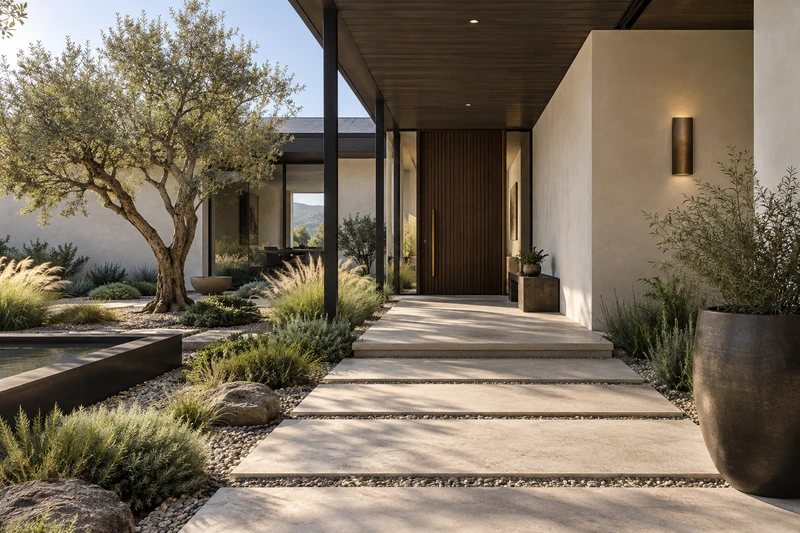
A restrained palette can still have depth. Give each material a reason to be present: one may establish the main body of the house, another may emphasize the entrance, and a third may bring warmth to the places you touch. The relationship matters more than the number of finishes.
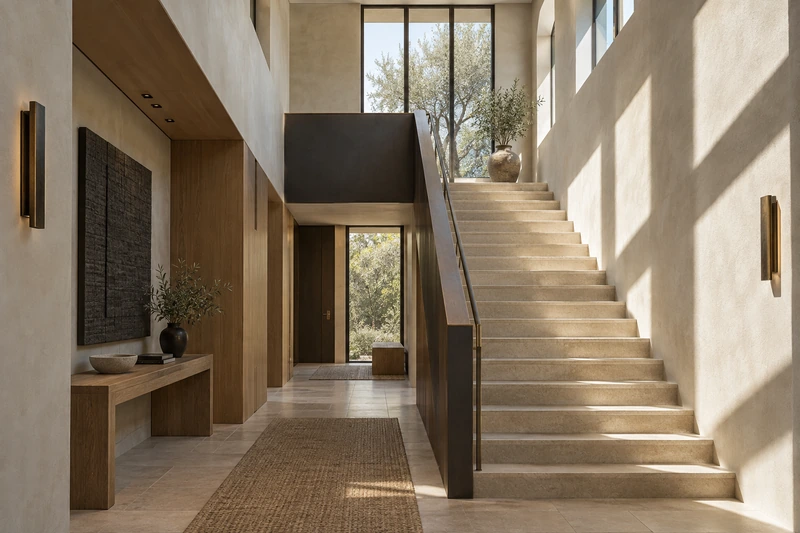
Consider how the exterior and interior speak to each other. They need not match literally, but a shared tone, texture or sense of simplicity can make the transition feel natural. Review the palette together before deciding on individual statement pieces.
Make the interior personal
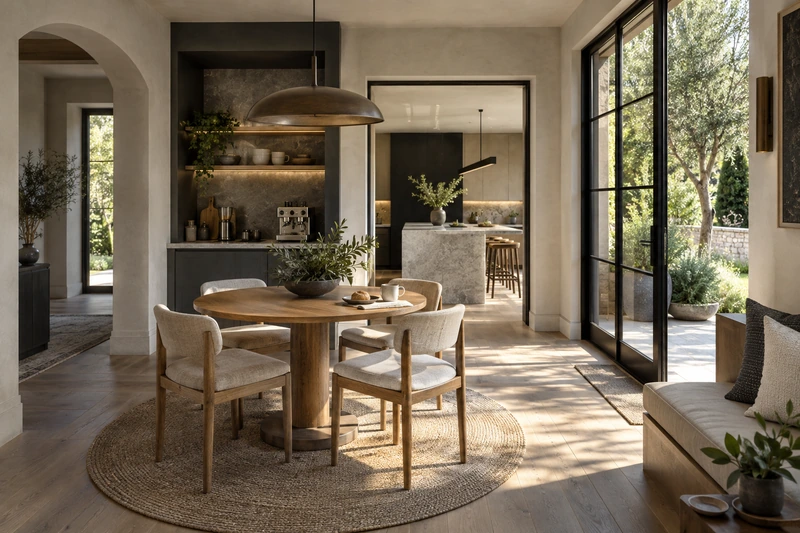
The name of a style should not dictate how every room is furnished or arranged. A modern farmhouse can accommodate a quiet study, collected art, a richly textured sitting room or a kitchen with a distinctly contemporary point of view. Your habits and possessions should help shape the interior.
Identify a few elements you would like to carry from your current home. A dining table, a favorite chair or a collection of ceramics can keep the new house connected to your life. Give those pieces a place in the early design conversation.
Let the setting finish the story
Think about the experience between house and garden. A porch might create a comfortable pause, a window could frame a familiar tree, or a terrace might become the natural destination after dinner. These connections can give the home a sense of belonging that decorative references alone cannot supply.
Prepare a brief that describes the feeling you want, the ways you live and the details you find meaningful. That combination leaves room for a modern farmhouse that is recognizable in spirit while remaining particular to your household and your property.
FOR YOUR OWN PROJECT
Make the idea your own.
- Choose references for their proportions as well as their finishes.
- Assign a clear role to each major material.
- Include furniture or objects you want to bring forward.
- Describe how the house should connect to its outdoor spaces.