CUSTOM HOMES / THE BLACKLINE JOURNAL
A custom home shaped around the way your day unfolds
The most personal starting point for a new home is the life already happening inside it. Look closely at your routines before drawing the rooms.
Begin with an ordinary morning
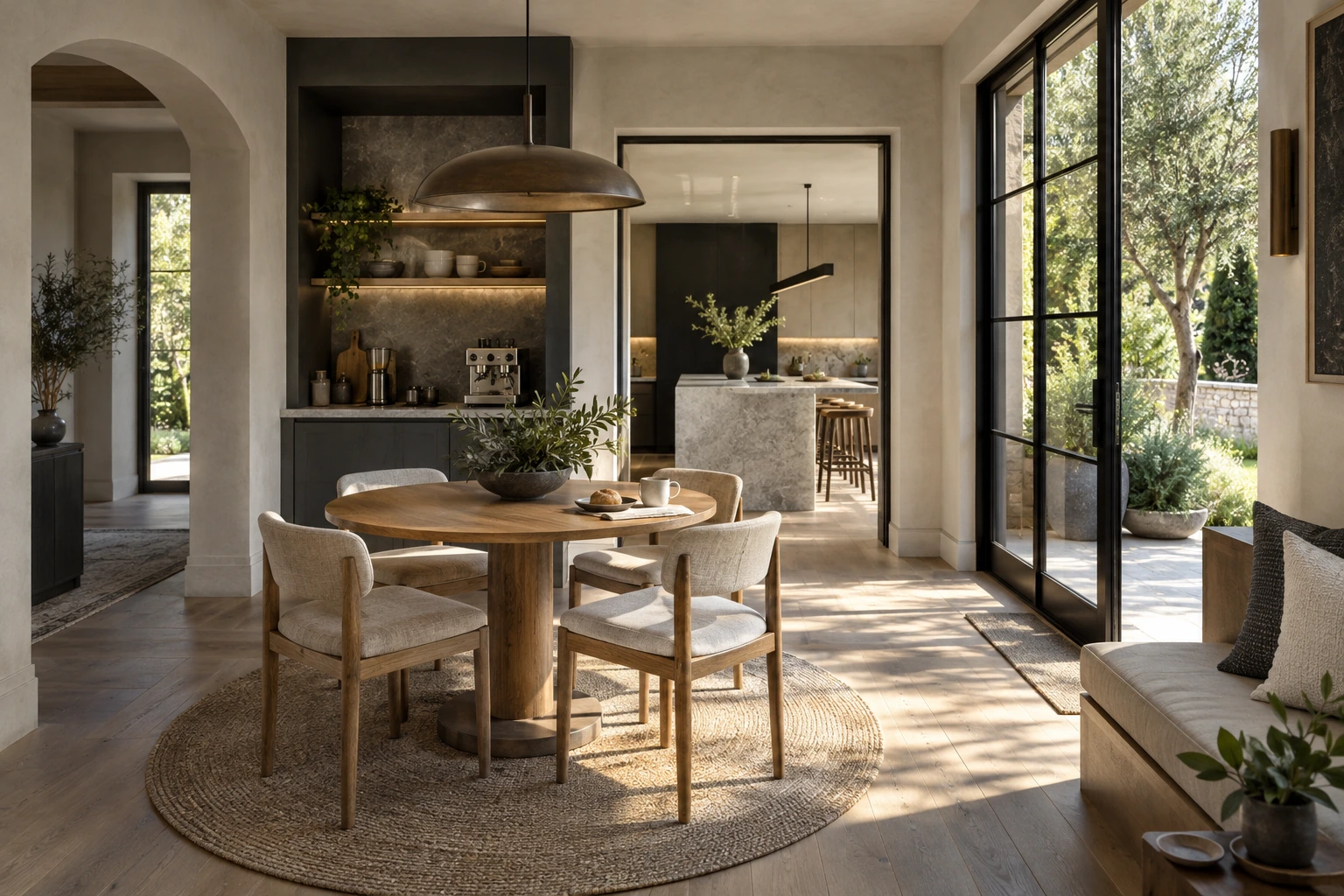
Imagine the house before anyone has tidied it. Someone is looking for a coat, coffee is being made, and a bedroom door is still closed. These ordinary moments tell you more about a useful floor plan than a photograph of an empty room. Write down where people cross paths, where they need room, and what they reach for first.
Include the less visible routines: feeding a pet, unpacking deliveries, sorting laundry or leaving for an early meeting. A considered home gives these activities a place without allowing them to dominate the rooms you share.
Map connections, then name rooms
Instead of beginning with a list of room sizes, describe the relationships that matter. Perhaps the kitchen should overlook the garden, the study should sit away from evening conversation, or the everyday entrance should connect naturally to storage. These are decisions about how the home feels in motion.
Then consider the pauses between rooms. A small place to set down a bag, a view at the end of a hallway or a doorway that frames the living room can make daily movement feel composed and intentional.
Give different rhythms room to coexist
A home often holds several versions of the same day. One person may work quietly while another cooks, hosts friends or practices music. Decide where you enjoy being together and where a little separation makes life easier. Connection does not require every activity to occupy one continuous space.
Think about guests as well as residents. A comfortable place for visitors to settle, an easily understood route to the powder room and a private retreat for the household can support a more relaxed welcome.
Let the brief grow with you
Your current routine is a valuable starting point, but it should not become a rigid prediction. Consider rooms that could change purpose as interests, work patterns or household arrangements evolve. Describe the qualities a room needs rather than assigning it a single permanent label.
Bring these observations to the project conversation alongside your visual references. A picture can express a mood; a record of your day explains why it matters. Together, they provide a richer foundation for a home that feels personal from its very first arrival.
FOR YOUR OWN PROJECT
Make the idea your own.
- Describe a weekday from waking to returning home.
- List the activities that need quiet or separation.
- Mark the connections that would simplify your routine.
- Identify rooms that may need a different purpose later.