RENOVATIONS / THE BLACKLINE JOURNAL
A basement that feels like a natural part of the home
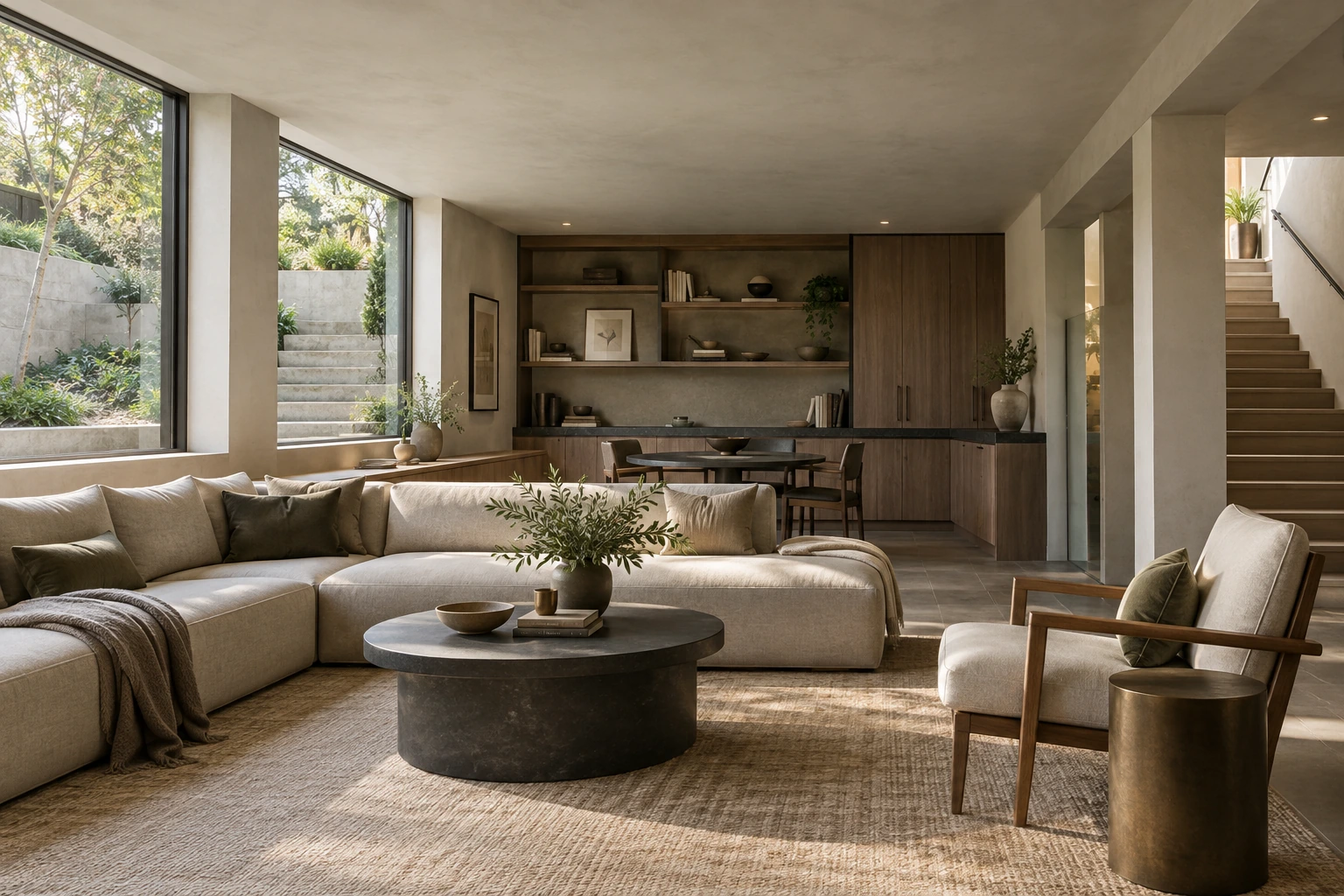
Give the lower level a clear purpose and a considered atmosphere. It can become a place you choose to spend time, rather than a room waiting for a use.
Choose the life the room will hold
A basement can attract a long list of possible uses. Before combining them all, decide which activities matter most to your household. A quiet place to watch a film, a room for hobbies and a lively space for guests may ask for different arrangements and different degrees of separation.
Think about how often each use would occur and who would participate. A clear purpose helps the room feel intentional. It also gives your project team a practical starting point for reviewing the existing space and discussing which ideas belong together.
Make the arrival part of the design
The experience begins before you reach the room. Consider the route downstairs, the view at the bottom and the first place a person is likely to pause. A thoughtful arrival can help the lower level feel connected to the home rather than set apart from it.
Look for visual relationships with the rooms above. A recurring material, a related color or a familiar level of detail can establish continuity. The basement can have its own mood, but it should feel like a deliberate chapter in the same house.
Give storage an active role
Basements often inherit the belongings that other rooms cannot accommodate. Make a realistic inventory of what will remain and how often you need it. Seasonal items, hobby equipment and everyday supplies may require different approaches to access and visibility.
Consider storage alongside the activities you are planning. A games area needs somewhere for its pieces, a creative workspace needs a place to put materials away, and a comfortable sitting room needs room for the objects people bring with them. The goal is a useful arrangement that allows the finished space to stay inviting while being lived in.
Build the atmosphere around comfort
Describe how you want the room to feel at the times you will use it. Think about seating, light, texture and the views within the space. Avoid relying on a single decorative feature to supply all of the character; the relationship between those elements creates the overall experience.
Bring the existing room and your intended uses into the same conversation with the project team. Their review can inform the design direction. A considered lower level begins with a clear purpose and becomes personal through the details that support how you spend time there.
FOR YOUR OWN PROJECT
Make the idea your own.
- Rank the activities the lower level should support.
- Review the route downstairs and the first view on arrival.
- Inventory the belongings that will remain in the space.
- Describe the room’s intended mood during its main hours of use.