PLANNING / THE BLACKLINE JOURNAL
Choose a design direction before choosing the finishes
A room becomes easier to shape when the larger idea is clear. Establish the atmosphere and relationships before asking individual products to lead the design.
Describe the atmosphere in ordinary language
Begin with how you want the house to feel, without naming products or styles. You might describe a quiet place to return to, a lively setting for friends or a warm interior with a strong connection to the garden. Those statements are useful because they connect design to experience.
Choose a few words that belong together and explain what they mean to you. One person’s idea of calm may be pale and open; another may prefer deep color and a sense of enclosure. Examples and personal explanations make the direction more precise.
Edit the reference collection
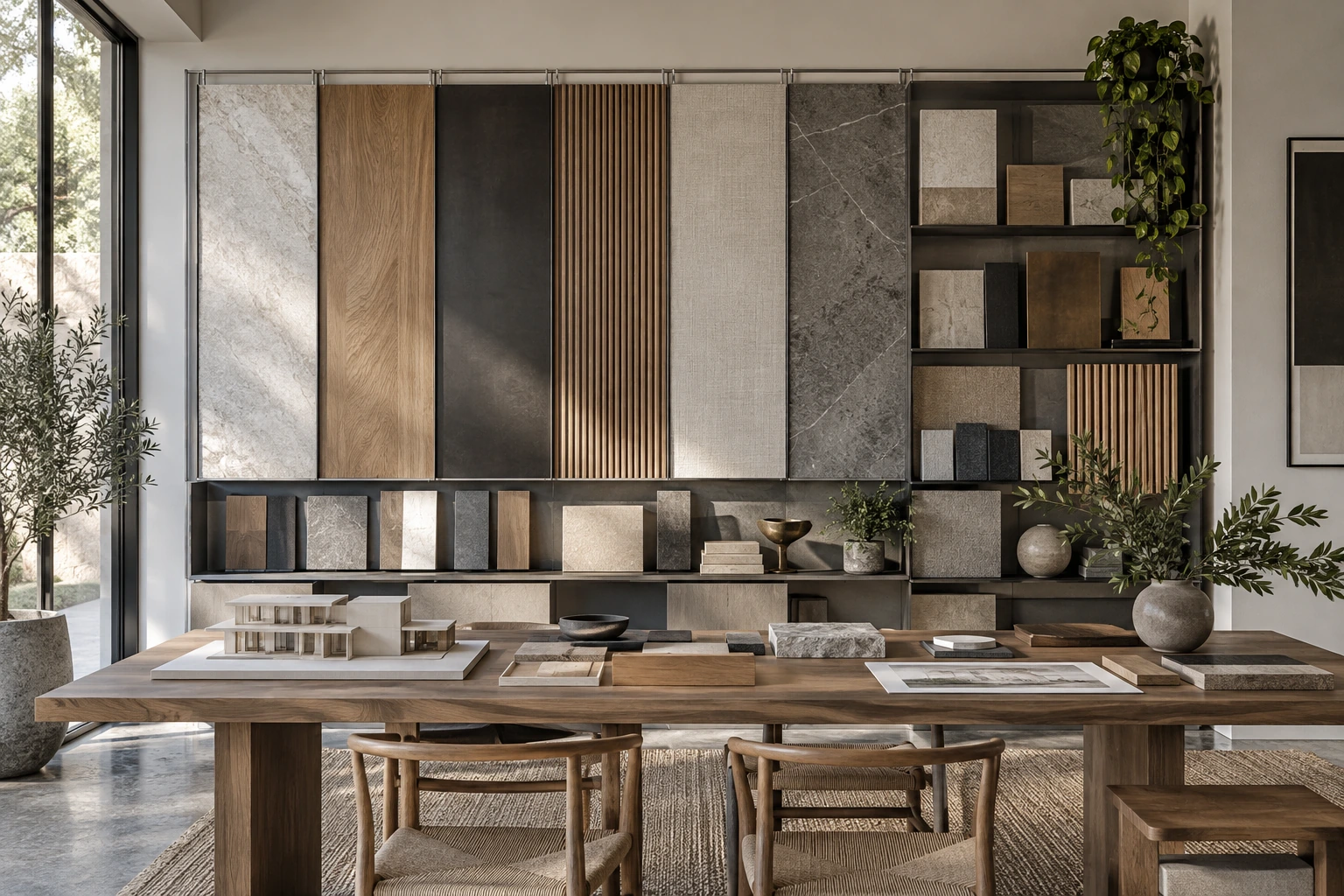
A large folder of beautiful images can contain several competing ideas. Review the collection and look for the references that most clearly support the atmosphere you described. Notice recurring proportions, materials, contrasts and relationships between rooms.
Set aside images that appeal for a single detail but pull the overall direction elsewhere. You can keep them in a separate group for later discussion. The aim is a collection small enough to tell a coherent story, with notes explaining what each image contributes to that story and what should remain simply a reference.
Agree on the larger relationships
Before selecting a particular finish, consider how the principal spaces relate to one another. Decide where continuity matters, where a change of mood is welcome and which views or features should hold attention. These relationships give individual selections a place within the larger composition.
This is also the moment to consider furniture and possessions you intend to retain. A cherished dining table or a collection of art can help anchor the direction. Finishes should create a setting for those pieces rather than becoming an unrelated layer of decisions made in isolation.
Use the direction to evaluate choices
When a new material or feature catches your eye, ask how it contributes to the agreed atmosphere. Does it strengthen the composition, introduce a useful contrast or distract from what you already value? The question is not whether the item is attractive on its own, but whether it belongs in this home.
Keep a concise record of the direction beside the developing selections. Revisit it when choices feel difficult or the collection begins to drift. A clear point of view gives you room to be expressive while keeping the house connected from one decision to the next.
FOR YOUR OWN PROJECT
Make the idea your own.
- Describe the intended atmosphere without naming products.
- Edit references into a small, clearly annotated collection.
- Identify the relationships that should connect principal spaces.
- Evaluate each new selection against the agreed direction.