PLANNING / THE BLACKLINE JOURNAL
A room-by-room brief that brings your project into focus
Give every room a clear purpose without losing sight of the whole home. A consistent set of notes makes preferences and priorities easier to discuss.
Use the same questions for every room
Begin each room brief with a short description of who uses the space and what happens there. Record the main activity, the occasional uses and the times of day when the room matters most. A consistent format makes it easier to compare needs across the house.
Include what already works if you are renovating. A room may have a comfortable proportion or a valued relationship to the garden even when other parts need attention. Recording those strengths helps the project conversation remain balanced and keeps useful qualities from being overlooked.
List what the room needs to hold
Write down the furniture, equipment and belongings associated with the room. Separate items you intend to retain from items you have not chosen. Include the smaller possessions that influence daily use, such as books beside a chair, serving pieces near a dining table or supplies for a hobby.
Then describe how those things should be experienced. Some deserve a visible place; others need convenient storage. This distinction gives the design team more useful information than a broad request for additional cabinets and helps the room develop around the way it will actually be lived in.
Describe the mood and the connections
Add a few words about the intended atmosphere, followed by a brief explanation. A quiet study may need a different mood from a lively family room, even when both belong to the same material palette. A selective reference image can help express that distinction.
Record the rooms and outdoor spaces that should feel close by. Also note where separation would be welcome. These relationships are part of the room brief, because a room’s comfort often depends on what happens around it as much as on the details inside its own boundaries.
Compare the briefs as a whole
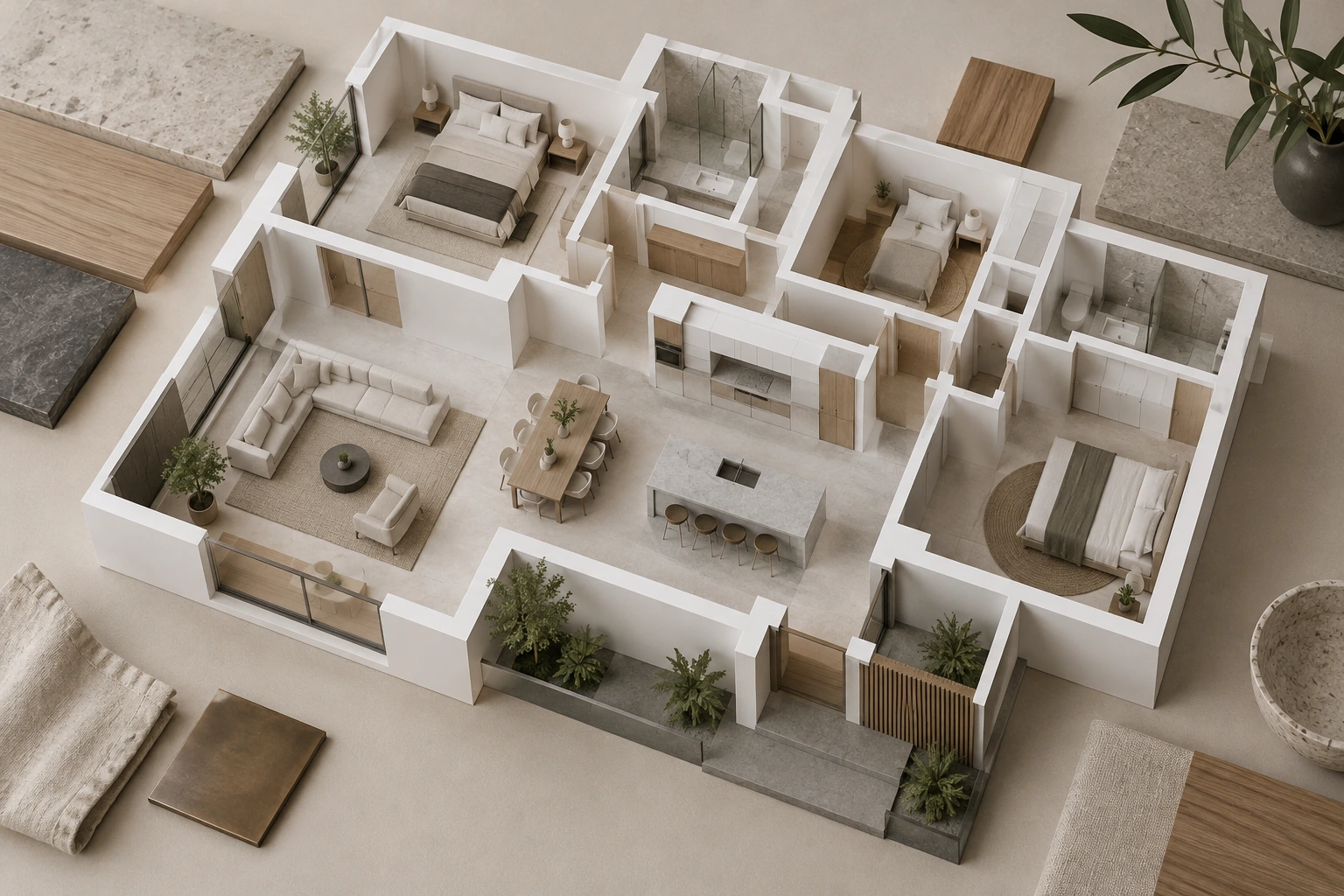
Read the completed notes together rather than treating each room as an independent project. Look for repeated needs, conflicting priorities and opportunities to share a useful function. You may find that two rooms are being asked to do the same thing while another important activity has no clear place.
Mark essential priorities separately from ideas to explore, then keep the briefs current as decisions develop. They should remain a working description of your intentions. Clear notes help connect the practical needs of each room with the broader feeling you want the finished home to convey.
FOR YOUR OWN PROJECT
Make the idea your own.
- Record users, activities and typical hours for each room.
- List retained furniture and the belongings that need a place.
- Describe atmosphere and relationships to nearby spaces.
- Compare all room briefs for overlaps and missing needs.