RENOVATIONS / THE BLACKLINE JOURNAL
A renovation brief that goes beyond a beautiful reference
The right images help express your taste. A stronger brief also explains what is changing, what matters and how you want the house to work.
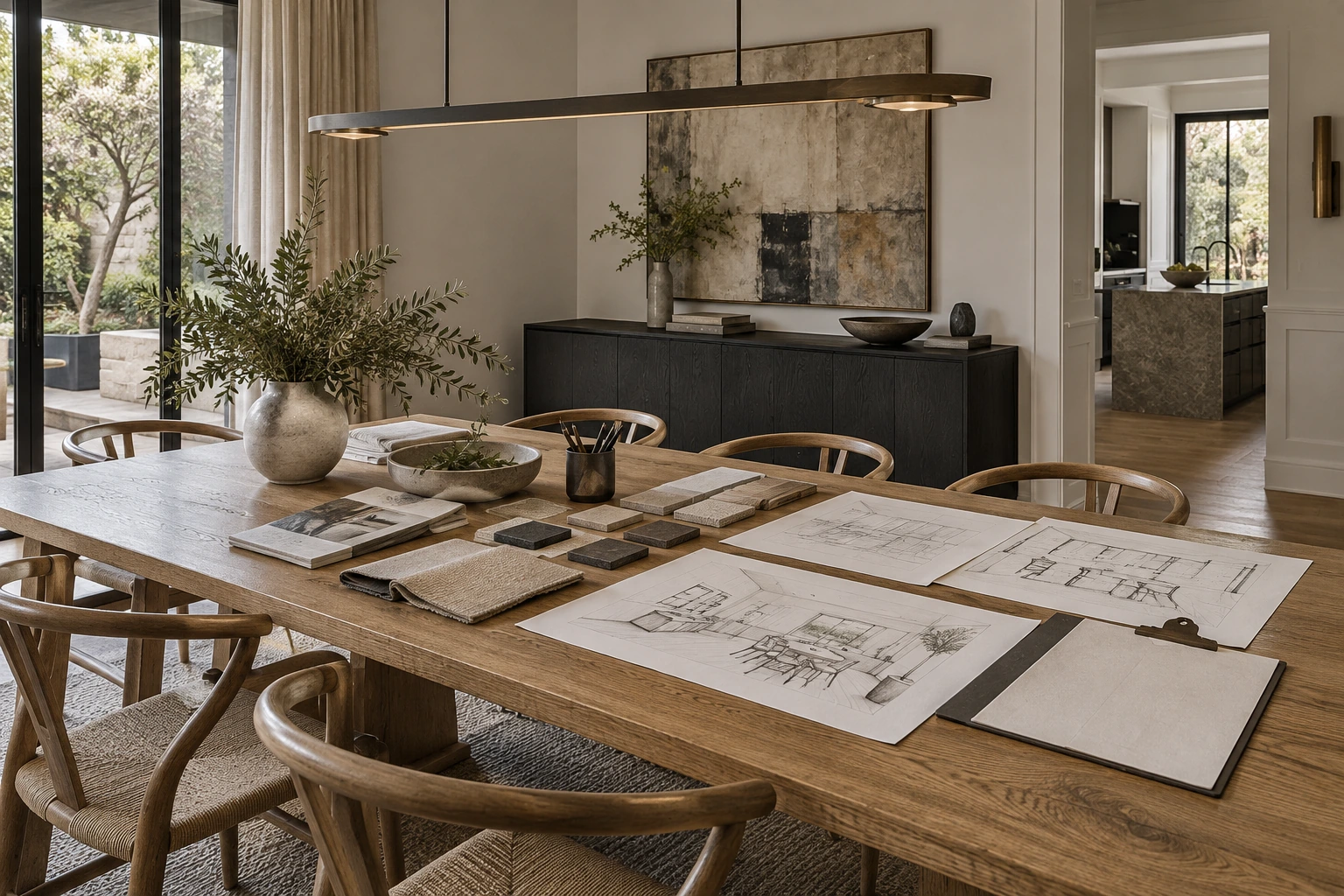
Describe the reason for the renovation
Begin with the moment that made you want to change the house. Perhaps the kitchen no longer suits your routine, the rooms feel disconnected or a new household arrangement has revealed a different need. State that reason plainly before collecting solutions.
Then explain what a satisfying outcome would look like in daily life. You might want to host more comfortably, work without occupying the dining table or make a familiar room useful again. These outcomes give the project conversation a sense of purpose that a style label cannot provide by itself.
Distinguish priorities from possibilities
A useful brief separates the things that matter most from ideas you would like to explore. This does not mean giving up the imaginative part of the project. It means making your preferences clear enough for the team to discuss choices with you.
Create a short list of essential experiences, followed by opportunities and open questions. Include what you would like to keep as well as what you would like to change. The exercise can reveal where household priorities align and where a conversation is still needed before the design becomes more detailed.
Annotate your references
For every image you save, add a sentence explaining its appeal. You may be drawn to the proportions, the warmth of a material or the relationship between two rooms rather than the full design. An annotation helps prevent a reference from being interpreted too literally.
Include images that show what you do not find comfortable, with a clear reason. These can be equally useful when discussed constructively. Keep the collection selective so the central direction remains visible, and avoid asking a single image to represent every aspiration for the finished home.
Bring the practical context into view
Record the information already available about the house, your intended scope and the way you expect to use it during the project. Note any existing concerns you want the team to review, without trying to diagnose them yourself. Clearly label what is known and what remains uncertain.
Finish with the questions you need the first conversation to address. A good brief does not pretend every decision has been made. It provides a thoughtful starting point: the reason for the work, the priorities behind it and enough context for the next discussion to be useful.
FOR YOUR OWN PROJECT
Make the idea your own.
- State the reason you want to renovate in one sentence.
- Separate essential experiences from ideas to explore.
- Explain what you like about every saved reference.
- List known information and questions that need review.