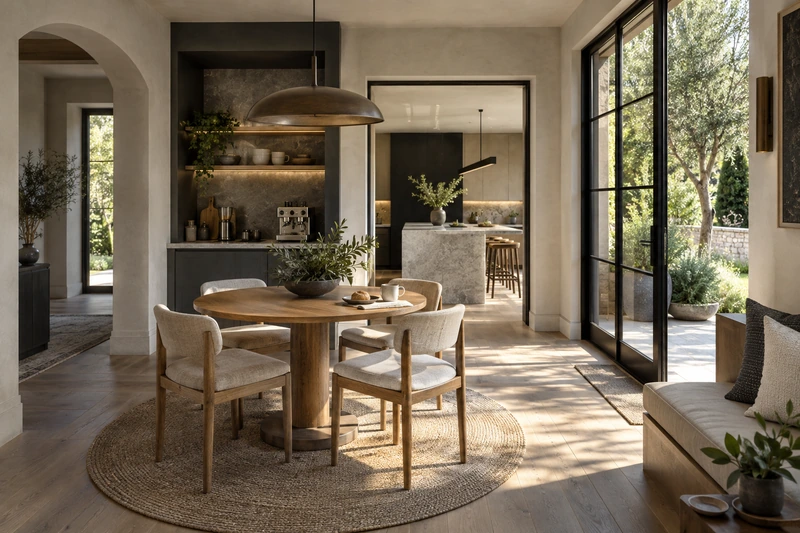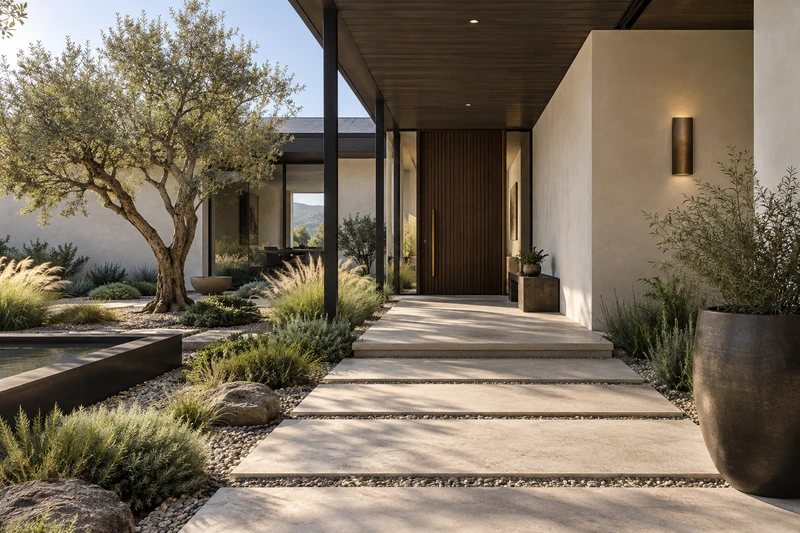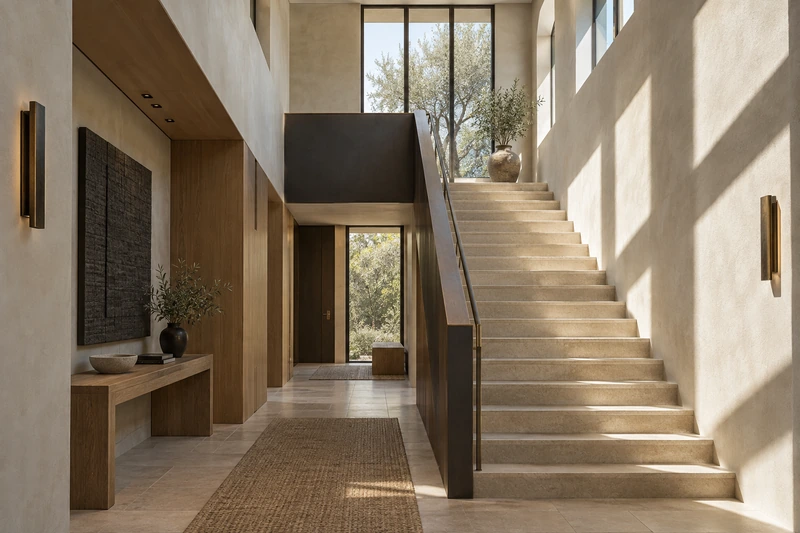
CUSTOM HOMES / THE BLACKLINE JOURNAL
Building a material palette that feels collected and coherent
A beautiful palette is a set of relationships. Choose surfaces in conversation with one another, then leave room for the details that make the home yours.
Find the common thread
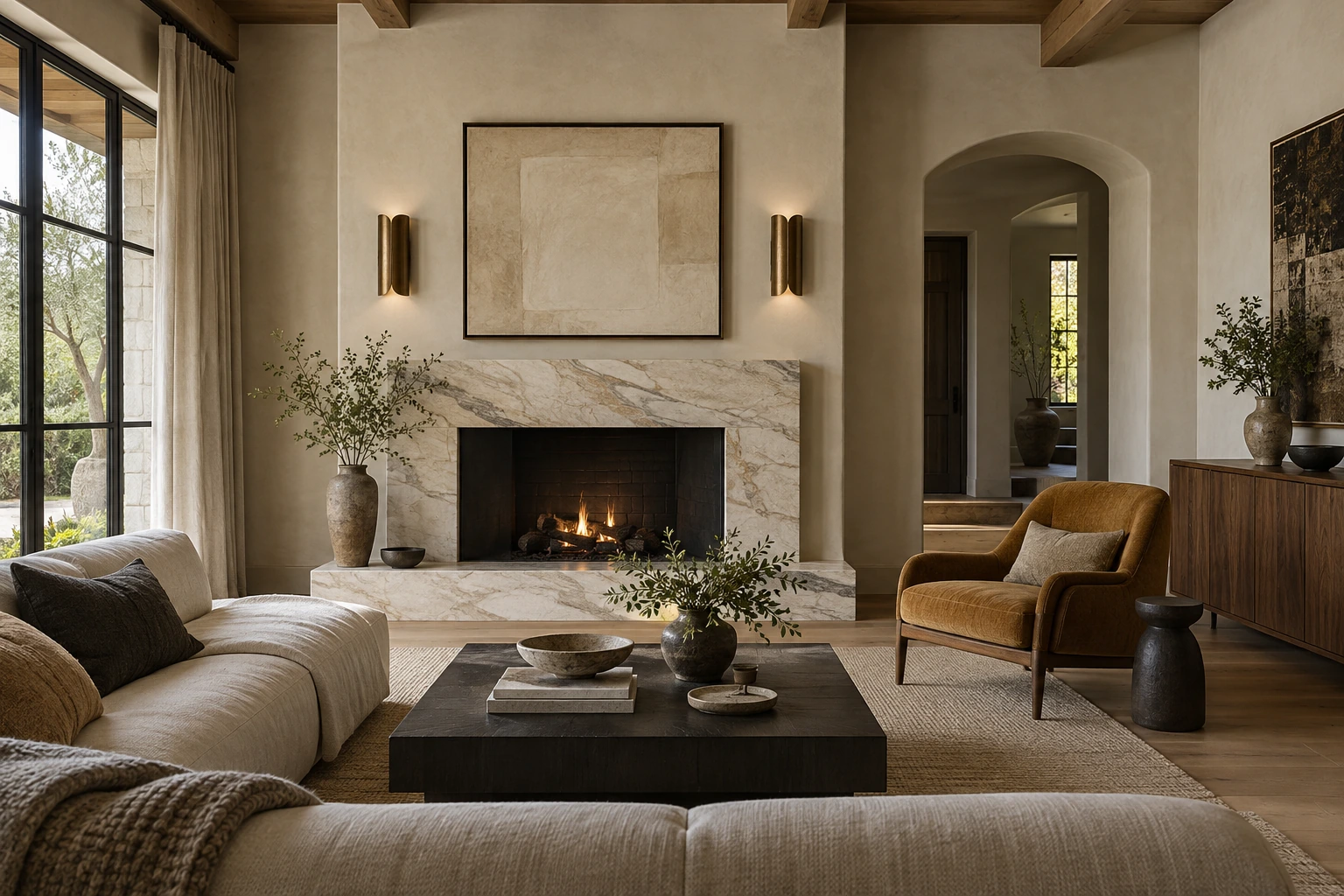
Begin with the feeling you want to carry through the house. It might be warm and grounded, quiet and luminous, or dark and enveloping. Gather a small group of references that express that feeling, then look for what they share beyond the obvious colors.
Perhaps the rooms rely on soft contrasts, natural textures or a limited number of strong gestures. Naming that common thread gives you a useful way to evaluate later choices. A beautiful finish may still be the wrong choice if it moves the house away from the atmosphere you intended.
Decide what leads and what supports
Not every material needs to become a focal point. Choose where you want richness or movement, then allow surrounding surfaces to support it. A lively stone, expressive timber or distinctive tile can have greater presence when the rest of the room offers a calmer setting.
This is also a useful conversation across connected spaces. Consider what can be seen through a doorway and whether adjacent rooms compete for attention. A shared background or recurring detail can connect them while preserving enough difference for each room to feel complete.
Review real samples as a group
A screen can introduce an idea, but it cannot tell the entire story of a material. Bring the principal samples together and look at them in different light. Notice how undertones change beside one another and whether the contrast feels intentional or accidental.
Include the smaller finishes that people often postpone. Hardware, metalwork, paint and textiles can influence how the larger surfaces are perceived. Keep a record of the selected combination so later decisions are made against the same reference rather than a memory of what seemed to work.
Make space for a personal note
Coherence does not require every room to repeat the same formula. A powder room, reading corner or private suite may offer room for a more expressive choice. Let that moment relate to the broader palette through tone, texture or proportion rather than demanding an exact match.
The final palette should also welcome the things you already own. Art, books, furniture and everyday objects will become part of the composition. A home feels more personal when its materials create a generous setting for life instead of asking life to conform to a finished display.
FOR YOUR OWN PROJECT
Make the idea your own.
- Write three words that describe the intended atmosphere.
- Choose which material will lead in each principal room.
- Review major and minor samples together in changing light.
- Test the palette against art and furniture you plan to keep.